Why Is My Electric Bill So High? 7 Hidden Reasons Homeowners Overpay Every Month
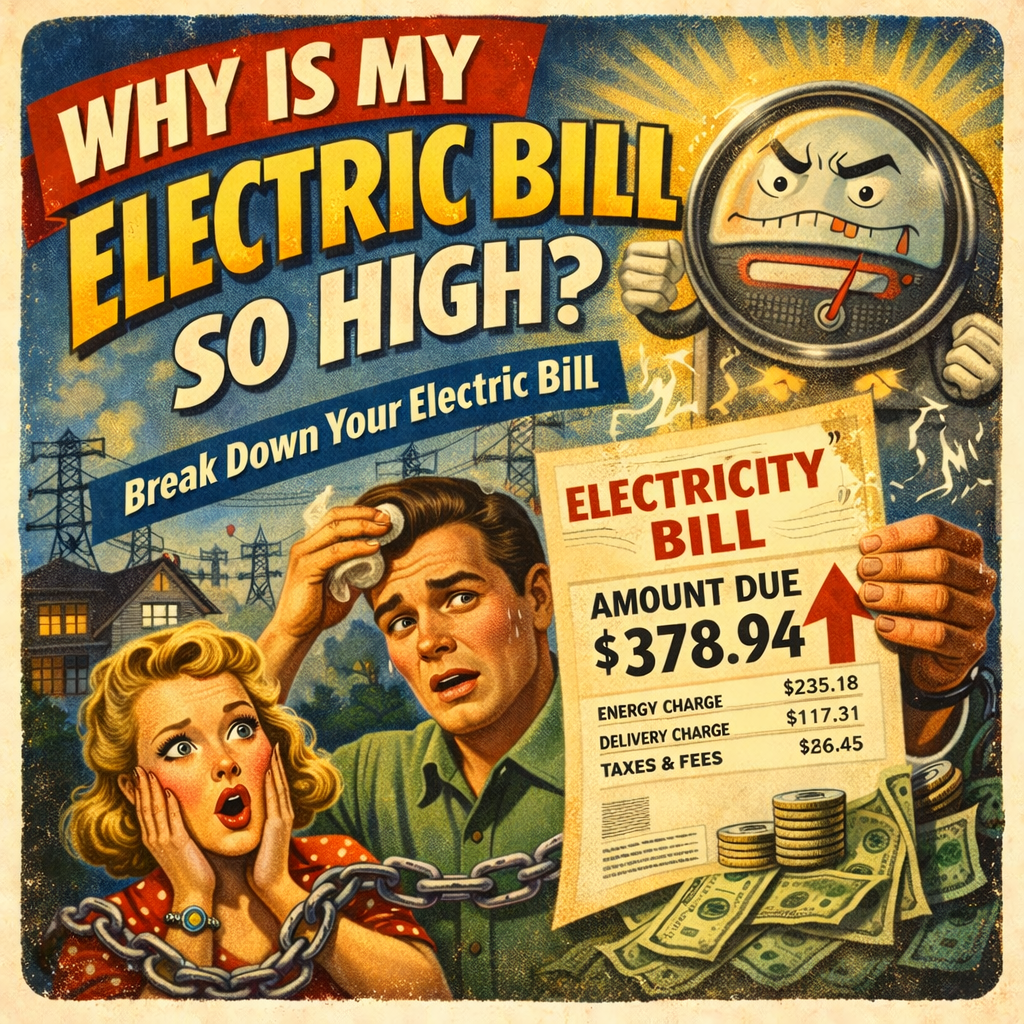
Break Down Your Electric Bill
If you live in Southern California and feel like your utility costs keep climbing, you’re not alone. Many homeowners served by Southern California Edison struggle to fully Break Down Your Electric Bill charges each month. Between tiered rates, Time-of-Use pricing, and seasonal adjustments, your statement can feel overwhelming.
In this guide, we’ll break down your electric Bill line by line so you can understand where your money is going — and uncover 7 hidden reasons you may be overpaying every single month.
1. You’re Not Properly Reading the SCE Rate Plan
Break Down Your Electric Bill: Understanding Your Rate Schedule
One of the biggest mistakes homeowners make is not knowing which rate plan they’re on. SCE uses Time-of-Use (TOU) rate structures that charge different prices depending on the time of day.
When you break down your electric bill details, you’ll notice:
- On-peak rates (typically late afternoon/evening)
- Off-peak rates
- Mid-peak pricing
- Seasonal summer vs. winter adjustments
If you’re running appliances during peak hours (4 PM–9 PM), you could be paying significantly more per kilowatt-hour (kWh). A proper break your down electric bill review shows exactly how much you’re paying during those expensive windows.
2. Phantom Energy Usage (Vampire Power)
Break Down Electric Bill: Hidden Standby Electricity Costs
Even when devices are off, they still draw power. TVs, gaming consoles, microwaves, and chargers quietly increase your monthly utility costs.
When you break down electric bill usage charges, standby energy may account for 5%–10% of your total electricity consumption.
Solutions:
- Use smart power strips
- Unplug unused electronics
- Upgrade to ENERGY STAR appliances
SEO Keywords: standby power usage, vampire electricity costs, home energy efficiency tips, lower electricity bill California.
3. Tiered Billing Structure
Break Down Your Electric Bill: Baseline Allowance Explained
SCE gives homeowners a “baseline” amount of electricity at a lower rate. Once you exceed that baseline, you pay higher tiered rates.
When you break down your electric bill, you may notice:
- Baseline charges
- Above-baseline charges
- High usage penalties
Going slightly over baseline can dramatically increase your cost per kWh. A thorough break down your electric bill analysis shows how quickly those higher tiers inflate your bill.
4. Seasonal Rate Increases
Break Down Electric Bill: Summer Price Spikes
Southern California summers are brutal. But the temperature isn’t the only thing rising — your rates often increase during peak summer months.
When you break down your electric bill statements from June through September, you’ll likely see:
- Higher per-kWh charges
- Increased air conditioning usage
- Peak-hour penalties
If you’re not shifting your energy usage to mornings or late evenings, summer TOU rates can cause shocking bill increases.
5. Old HVAC Systems & Poor Insulation
Break Down Your Electric Bill: Energy Efficiency Gaps
Your heating and cooling system accounts for nearly 40%–50% of home electricity use in California.
When you break down your electric bill, look at usage spikes during extreme weather. Older HVAC systems, leaky ductwork, and poor attic insulation dramatically increase energy consumption.
Upgrades that help:
- High-efficiency heat pump
- Smart thermostat
- Attic insulation improvement
- Duct sealing
6. Delivery Charges & Non-Energy Fees
Break Down Your Electric Bill: Understanding SCE Delivery Fees
Many homeowners focus only on energy usage charges — but delivery fees are often just as expensive.
When you break down your electric bill, you’ll see:
- Generation charges
- Delivery charges
- Public purpose program fees
- Wildfire mitigation charges
Even if you reduce usage, these fixed and semi-fixed fees still apply.
7. You Haven’t Compared Solar Savings
Break Down Your Electric Bill: Long-Term Cost Control
If your bill consistently exceeds $250–$400 per month, it may be time to evaluate long-term solutions like solar.
By learning how to properly break down your electric bill data over a 12-month average, you can calculate:
- Annual energy consumption (kWh)
- Average cost per kWh
- Total yearly electricity spending
For many Southern California homeowners, locking in predictable solar payments reduces exposure to rising utility rate hikes.
Final Thoughts: Take Control When You Break Down Your Electric Bill
Most homeowners never fully break down your electric bill statements — and that’s exactly why overpaying continues month after month. By understanding rate plans, tier structures, peak-hour pricing, and hidden fees, you can take real control over your electricity expenses.
If your bill feels unusually high, don’t assume it’s normal. Instead, gather 12 months of statements and carefully break down your electric bill charges to spot trends and opportunities to save.
Knowledge is power — and in this case, it can literally lower your power bill.