
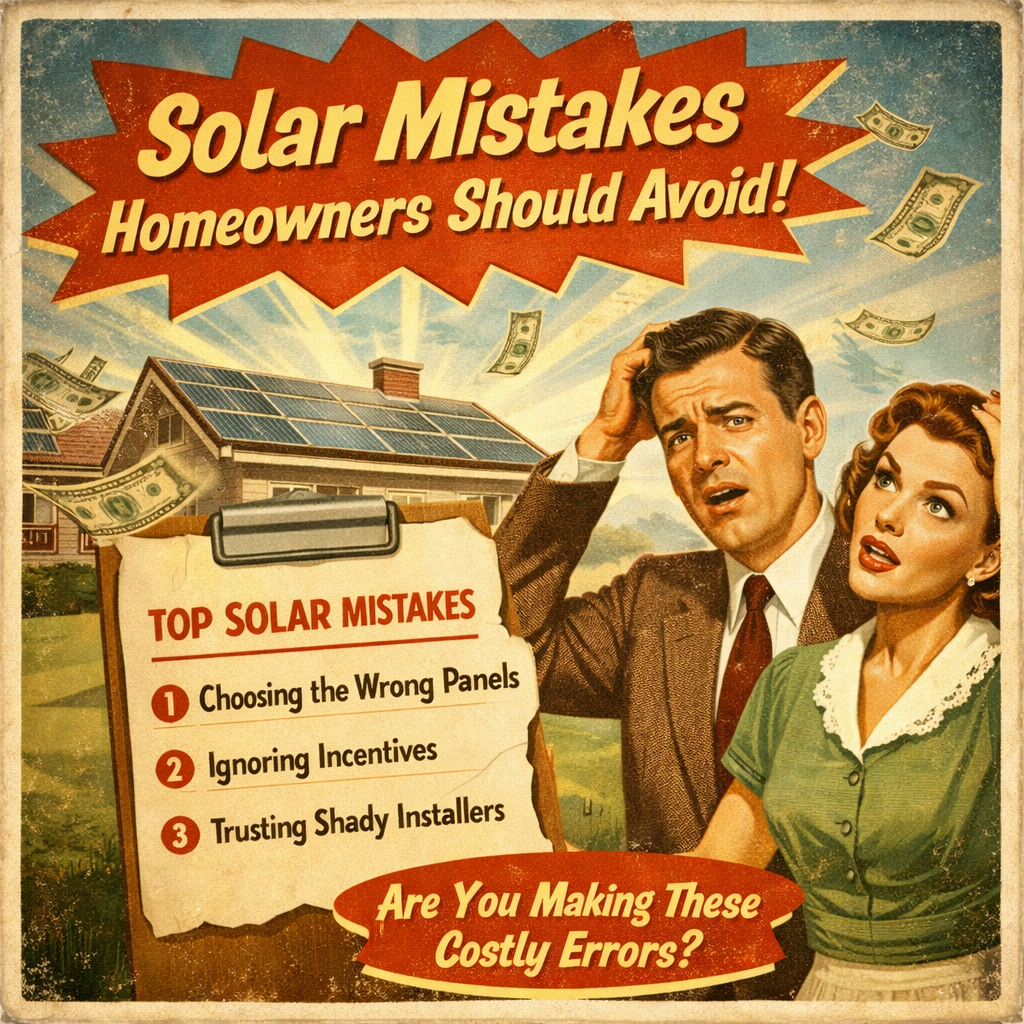
What Are the Biggest Solar Mistakes Homeowners Make? (And How to Avoid These Costly Solar Mistakes)
Switching to solar energy is one of the smartest financial and environmental decisions a homeowner can make. With rising electricity rates, changing net metering policies, and increasing demand for energy independence, residential solar systems are more popular than ever. But while going solar can deliver long-term savings and increase home value, many homeowners still make serious solar mistakes that cost them thousands of dollars.
If you’re considering installing a solar panel system, understanding the most common solar mistakes can protect your investment and maximize your return on investment (ROI). Let’s break down the biggest pitfalls homeowners face — and how to avoid them.
1. Not Understanding Their Energy Usage (One of the Most Common Solar Mistakes)
One of the biggest solar mistakes homeowners make is installing a system without fully understanding their electricity consumption. Before designing a residential solar panel system, you must review at least 12 months of utility bills.
Many homeowners guess their usage instead of analyzing:
- Peak summer electricity usage
- Seasonal consumption spikes
- Time-of-use rate plans
- Future increases (EV chargers, pool pumps, home additions)
If you oversize or undersize your system, your solar savings projections will be inaccurate. A professional solar consultation should include a detailed energy audit and system production estimate.
SEO Tip: Always request a solar production report that includes estimated annual kWh output and system degradation rates.
2. Choosing the Cheapest Solar Quote (Major Solar Mistakes That Backfire)
Going with the lowest solar installation quote may seem smart — but it’s one of the most expensive solar mistakes in the long run.
Cheap solar systems often cut corners on:
- Panel efficiency ratings
- Inverter quality
- Installation labor
- Roof sealing and mounting hardware
- Workmanship warranties
High-quality solar panels typically come with 25-year performance warranties. Low-cost systems may use Tier-2 or unproven manufacturers.
Remember: this is a 25–30 year investment. Saving $2,000 upfront could cost you $10,000 in lost performance and repairs.
When comparing quotes, look at:
- Cost per watt
- Equipment brand reputation
- Warranty coverage
- Installer reviews
- Monitoring software access
Avoiding these types of solar mistakes ensures long-term performance and financial stability.
3. Ignoring Roof Condition Before Installation
Installing solar panels on an aging roof is another critical solar mistake. If your roof has less than 10–15 years of life remaining, replacing it before going solar may be the smarter financial move.
Why?
Because removing and reinstalling solar panels later can cost $3,000–$6,000 or more.
Smart homeowners schedule a roof inspection before installation. Combining roof replacement with solar installation can even reduce labor costs.
This is especially important in states like California, Arizona, Nevada, and Texas, where high heat impacts roofing materials and solar system longevity.
4. Not Understanding Net Metering Policies
Net metering policies vary by state and utility provider. One of the biggest solar mistakes homeowners make is assuming net metering works the same everywhere.
For example, in California, the transition to California Public Utilities Commission NEM 3.0 significantly reduced export compensation rates.
Failing to understand:
- Net billing structures
- Export rates
- Battery storage incentives
- Time-of-use rate changes
…can dramatically affect solar payback periods.
Homeowners should always ask for a side-by-side comparison of:
- Current electric bill
- Post-solar projected bill
- Export compensation rate
- Estimated solar payback timeline
Not knowing these details is one of the most financially damaging solar mistakes.
5. Skipping Battery Storage Evaluation
With rising grid instability and power outages, battery storage is becoming a critical part of modern solar energy systems. Yet many homeowners dismiss batteries without evaluating the benefits.
This can be one of the overlooked solar mistakes, especially in high-rate utility territories.
Solar battery storage systems can:
- Provide backup power during outages
- Store excess solar production
- Maximize self-consumption
- Reduce reliance on utility companies
- Improve ROI under net billing structures
Under NEM 3.0 and similar policies nationwide, battery storage often makes financial sense.
6. Falling for Aggressive Solar Sales Tactics
Door-to-door sales reps sometimes push “no money down solar” or “free solar panels” messaging. While solar financing options like leases, PPAs, and loans can be legitimate, misunderstanding contract terms is one of the most common solar mistakes.
Homeowners should carefully review:
- Escalator clauses
- System ownership terms
- Early buyout options
- Transferability when selling the home
- Total lifetime cost of financing
Always read the full contract. If it feels rushed or unclear, that’s a red flag.
7. Not Considering Long-Term Home Value Impact
Solar panels can increase home value, but only if structured properly. One of the hidden solar mistakes is choosing a financing option that complicates resale.
Studies from Zillow suggest that homes with owned solar systems sell at a premium compared to non-solar homes.
However:
- Solar leases may require buyer qualification
- PPAs can complicate escrow
- Unpaid solar loans may delay closing
Owning your system outright often simplifies resale and maximizes return on investment.
How to Avoid These Costly Solar Mistakes
To avoid the most expensive solar mistakes, follow this checklist:
✔ Analyze 12 months of energy usage
✔ Compare multiple solar quotes
✔ Inspect roof condition
✔ Understand local net metering rules
✔ Evaluate battery storage options
✔ Read financing contracts carefully
✔ Consider long-term home resale value
Solar energy can deliver 20–30 years of predictable electricity savings, protection against rising utility rates, and increased energy independence. But only if installed and structured correctly.
Avoiding common solar mistakes ensures your residential solar investment performs at its highest potential.
Final Thoughts on Solar Mistakes
Going solar is not just about installing panels — it’s about making informed decisions about financing, equipment quality, local regulations, and long-term performance.
The biggest solar mistakes happen when homeowners rush the process or rely solely on sales presentations. Education is your best defense.
If you’re considering solar installation, take your time, ask detailed questions, and demand transparent numbers. When done right, solar energy is one of the strongest financial investments available to homeowners today.
And when done wrong? Those solar mistakes can cost you.
Make sure you’re on the right side of that equation.
What Questions Should I Ask Before Going Solar? – Click Here!