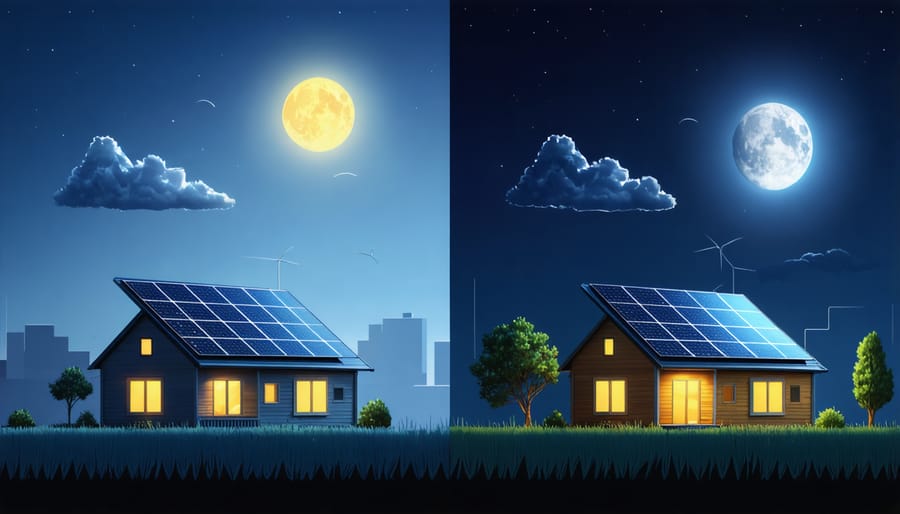
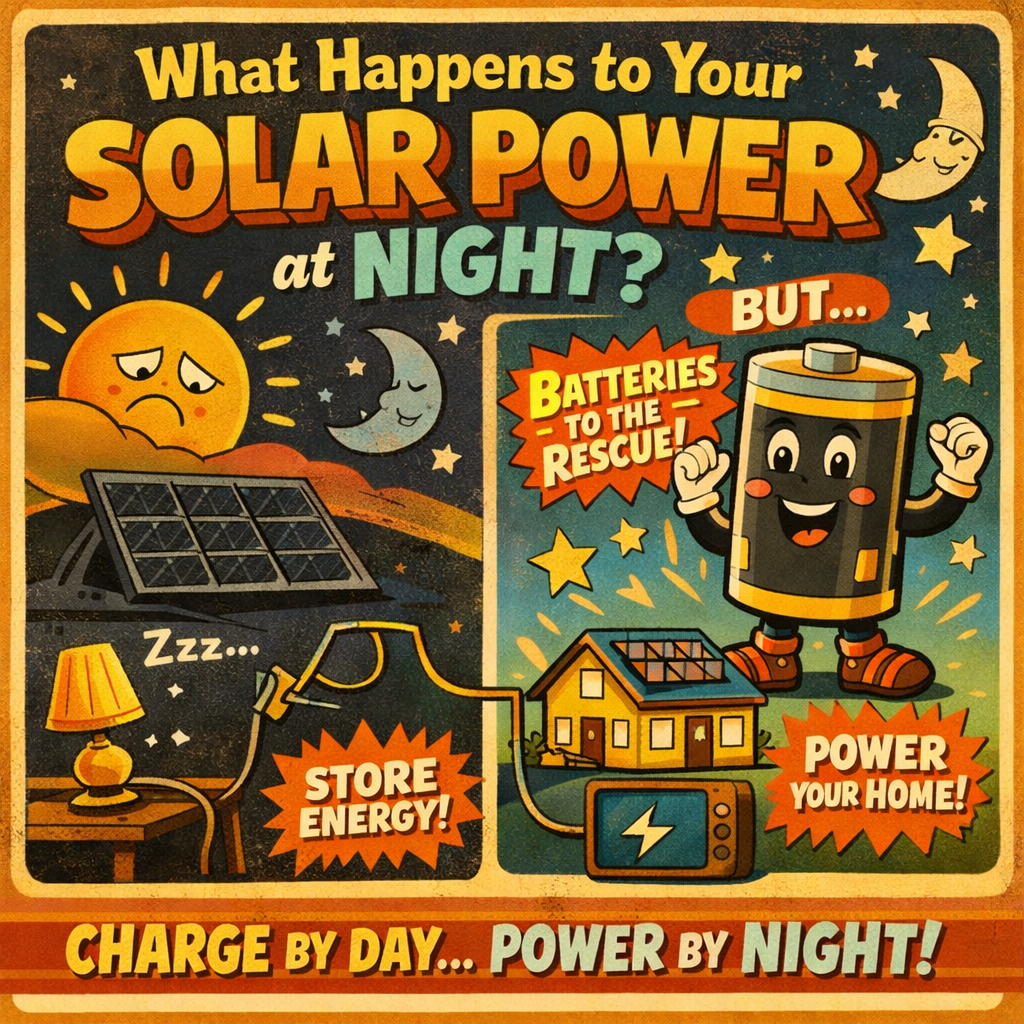
If you’re a homeowner considering solar, one of the most common questions is simple: what happens to your solar power at night? It’s a fair concern. After all, solar panels rely on sunlight—so what happens when the sun goes down?
In 2026, the answer is more important than ever. With rising utility rates and changes to net metering, understanding how your power works after dark can make or break your long-term savings.
Let’s break it down.
Where Does Your Solar Energy Go During the Day?
During daylight hours, your solar panels are producing energy for your home in real time. Appliances, lights, and electronics all run off the energy your system generates.
If your system produces more power than your home is using, that excess energy is typically sent back to the grid. In the past, homeowners received strong credits for this extra energy but today, those credits are often much lower depending on your utility.
That means the true value of your solar energy isn’t just producing it, it’s using it wisely.
What Happens to Your Power at Night?
At night, your solar panels stop producing electricity completely. Without sunlight, there’s no energy generation happening on your roof.
So what powers your home?
In most traditional solar setups, your home simply pulls power from the utility grid once the sun goes down. This means you’re still relying on your utility company during the most expensive hours typically in the evening when rates are highest.
This is where many homeowners feel the gap. They expected full energy independence, but instead, they’re still buying energy when they need it most.
The Problem with Relying on Grid Power
Utility companies in 2026 commonly use Time-of-Use (TOU) rate structures. That means electricity costs more during peak hours usually in the evening when people are home, cooking, and using more energy.
So even if your system produced plenty of power during the day, you may not be getting full value from it at night.
This creates a cycle:
-
You send excess energy to the grid during the day
-
You buy back energy at a higher rate at night
Not exactly the win most homeowners were hoping for.
How Batteries Store Your Solar Power
This is where battery storage changes everything.
A home battery allows you to store your unused solar power during the day instead of sending it back to the grid. Then, when the sun goes down, your home can draw from that stored energy instead of pulling expensive power from the utility.
Think of it like this:
You’re saving your own energy for when you actually need it.
This shift gives homeowners more control, more savings, and more consistency.
Power Through the Night (and Outages)
One of the biggest advantages of adding a battery is the ability to maintain power even when the grid goes down.
Without a battery, most solar systems automatically shut off during an outage for safety reasons. But with battery backup, your home can continue running on stored energy.
That means:
-
Lights stay on
-
Refrigerators keep running
-
Essential devices stay charged
In areas where outages are becoming more common, this is a major benefit—not just a luxury.
Why Solar + Battery Is the Future of Home Power
In 2026, solar alone is no longer the full solution it once was. Rising rates, reduced export credits, and grid instability have changed the game.
Homeowners are now thinking beyond just generating power they’re thinking about controlling it.
By combining solar panels with battery storage, you:
-
Maximize the value of your energy
-
Reduce reliance on the grid
-
Protect yourself from rising rates
-
Gain peace of mind during outages
Final Thoughts: Take Control of Your Power
So, what happens to your solar at night?
Without a battery, you give up control and go back to relying on the grid. But with the right setup, you can store, manage, and use your energy on your terms day and night.
If you’re considering solar in 2026, the real question isn’t just “Should I go solar?”
It’s: “How do I take full control of my power?”