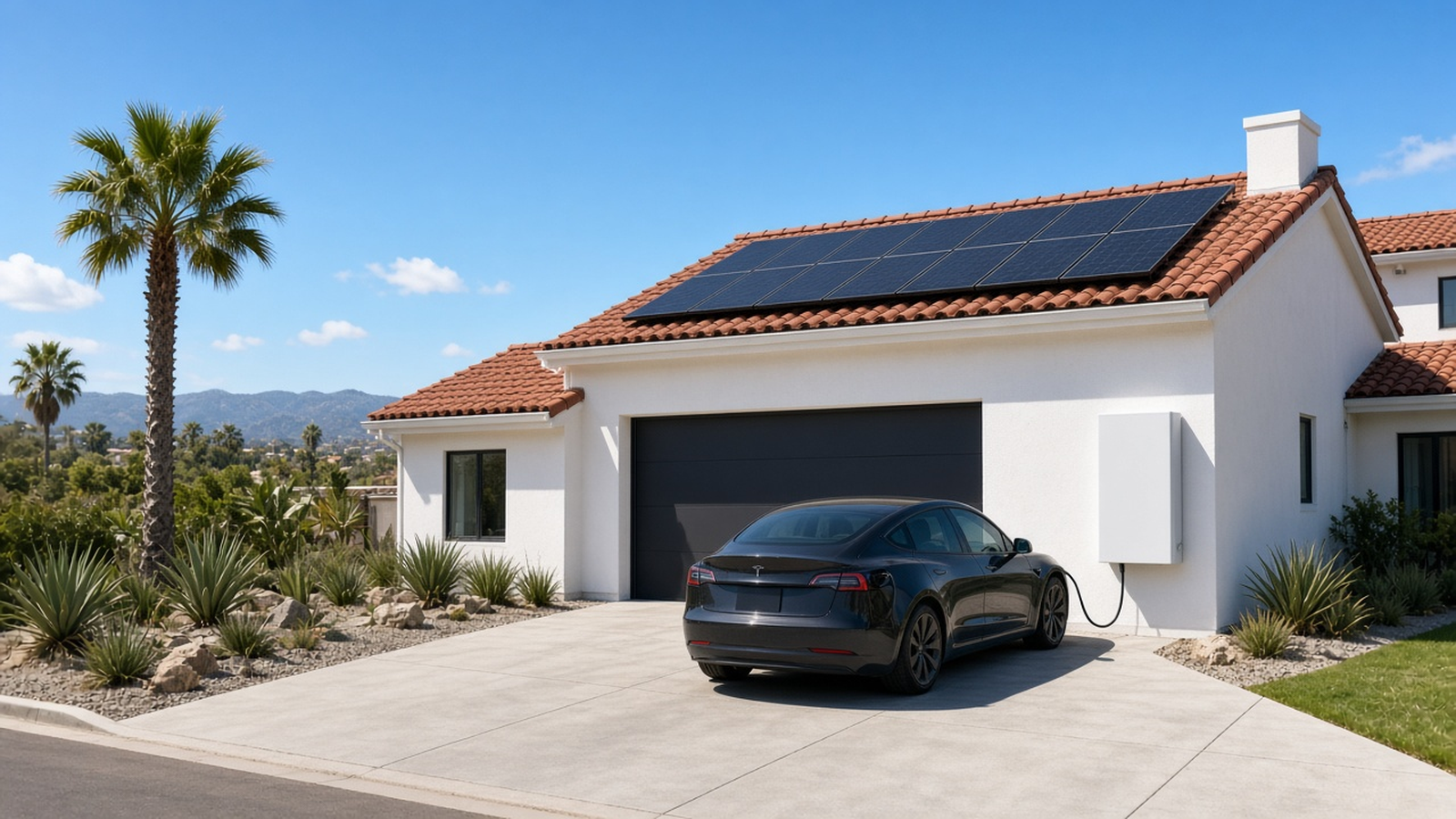

Did you notice that SDG&E’s super off-peak hours changed this year? Most San Diego homeowners didn’t. Since April 1, 2026, SDG&E has added a weekday super off-peak window from 10 a.m. to 2 p.m. year-round, which lines up almost perfectly with the hours your solar panels produce the most power.
That matters because bills haven’t gotten any easier. SDG&E bills went up in January, and SDG&E says the increase came mostly from the commodity part of the bill, which is the cost of the electricity itself. Wildfire cost recovery is also being built into delivery rates. If you have solar, are thinking about it, or are adding a battery, understanding these hours can help you get more out of every kilowatt-hour.
What Changed With SDG&E’s Time-of-Use Hours?
According to SDG&E’s residential pricing plan page, the popular TOU-DR1 plan now breaks the day into three price periods:
- Super off-peak (cheapest): weekdays from midnight to 6 a.m. and from 10 a.m. to 2 p.m.; weekends and holidays from midnight to 2 p.m.
- Off-peak: weekdays from 6 to 10 a.m., 2 to 4 p.m., and 9 p.m. to midnight; weekends and holidays from 2 to 4 p.m. and 9 p.m. to midnight
- On-peak (most expensive): 4 to 9 p.m. every day
How big is the gap? For non-CCA customers on TOU-DR1, SDG&E lists Tier 1 pricing effective November 1, 2026 at about 33.0¢ per kWh during super off-peak and about 50.8¢ during on-peak. Those prices are rounded and exclude the monthly Base Services Charge, and they will be different if you buy power through a Community Choice Aggregator or use another plan. The point is the same either way: when you use electricity matters almost as much as how much you use.
Why Are San Diego Bills Still Rising?
In SDG&E’s explanation of January 2026 bills, the utility says most of the increase came from the commodity portion of the bill and that the delivery portion actually went down. It also points to lower-than-expected electricity sales, which spread the grid’s fixed costs across fewer kilowatt-hours.
Then there’s wildfire spending. An April 1 rate filing summarized by California Regulatory Intelligence adds about $48 million a year in wildfire cost recovery to distribution rates. The same filing projected that typical residential bills would drop slightly, mostly because of the expanded midday super off-peak window. In other words, the new hours can help you, but only if your home is set up to take advantage of them.
What Do the New Hours Mean for a Solar Home?
Your panels produce the most power around midday, and that is now when grid power is cheapest. Under NEM 3.0, now called the Solar Billing Plan, extra solar you send back to the grid generally earns less than you pay to buy power back in the evening. So for newer solar homes, the goal isn’t to export as much as possible. It’s to use your own solar as much as you can, especially during the expensive evening hours.
There’s an honest tradeoff here, too. Midday grid power is cheaper now, so each kilowatt-hour your panels make at noon saves you a little less than one made later. Solar alone can’t cover 4 to 9 p.m., when the sun is setting and prices are highest. That’s where a battery comes in.
How Should You Time Your Battery?
With a battery, the general strategy is simple:
- Charge from solar during the day. From 10 a.m. to 2 p.m., your panels can usually cover the house and fill the battery.
- Save the battery for 4 to 9 p.m. Running on stored power during on-peak hours avoids buying your most expensive electricity.
- Let the grid fill the gaps when it’s cheap. Overnight and midday super off-peak hours are the cheapest times to buy power when you need it.
Most modern batteries, including Tesla Powerwall and Enphase systems, have a time-based or “self-consumption” mode that handles this automatically once it’s set up for your rate plan. If your installer set up your battery before April, make sure its schedule reflects the new hours.
Everyday Habits That Make a Difference
You don’t have to rearrange your life. A few small changes can shift a lot of usage:
- Run big appliances midday. Use delay timers on the dishwasher, washer, and dryer so they run between 10 a.m. and 2 p.m., or overnight.
- Charge your EV at the right time. If the car is home during the day, charge it from solar. If not, charge overnight during super off-peak, not right after you get home at 5 p.m.
- Pre-cool your home. On hot days, cool the house down in the early afternoon, then let the thermostat drift up a few degrees after 4 p.m.
- Pool pumps and water heaters. Schedule them for midday when you can.
What Solar and Batteries Can—and Cannot—Do
A solar and battery system won’t change SDG&E’s rates, and it won’t remove fixed charges like the Base Services Charge. Savings depend on your roof, your usage, your rate plan, and your battery size, so be skeptical of any promise that sounds too good. What a well-designed system can do is cut how much on-peak power you buy and give you backup power during outages.
The Bottom Line
SDG&E’s new 10 a.m. to 2 p.m. super off-peak window rewards homes that can move energy use to the middle of the day and avoid the 4 to 9 p.m. peak. Solar covers the daytime, and a battery covers the evening. Together, they give San Diego homeowners more control over a bill that keeps changing.
Ready to see what solar + battery could do for your home?
Vibe Solar serves homeowners from Bakersfield to San Diego. We review your SDG&E bill, rate plan, and backup priorities, then design a system around how your household uses power. Already have solar? We can help you figure out whether adding a battery makes sense.
Call 661.485.5000 or Click Here to Book Your Free Consultation.
Check out our other blogs HERE.