
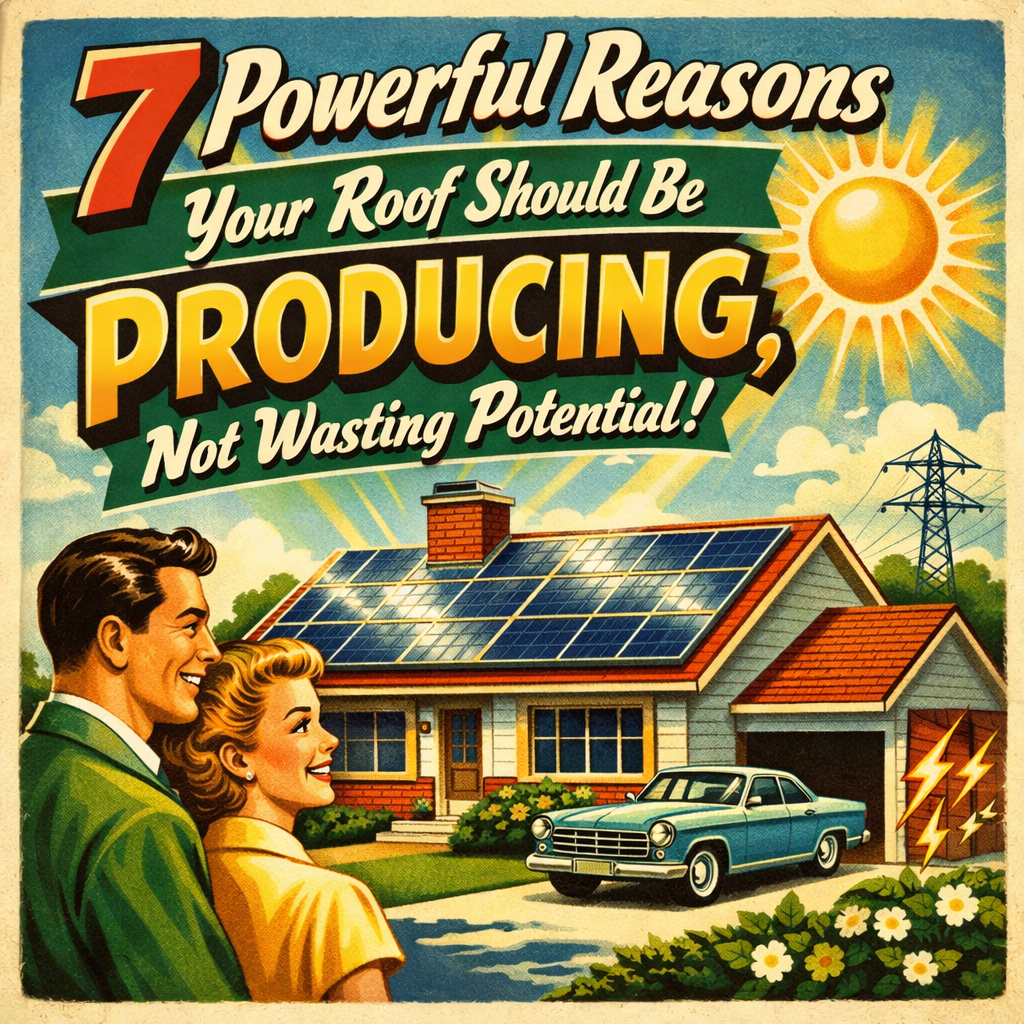
When most homeowners think about their roof, they think of protection—something that shields their home from rain, wind, and sun. But what if your roof could do more than just protect? What if it could actively work for you, generating value every single day? The truth is, your roof is either producing something meaningful—or it’s wasting its full potential.
For decades, roofs have been viewed as passive structures. They sit there, exposed to sunlight for hours every day, yet do nothing with that energy. Meanwhile, homeowners continue to pay rising utility bills, essentially buying power that could have been generated right above their heads. This outdated way of thinking is costing homeowners more than they realize.
Imagine this: every day the sun rises, your roof is being hit with free, abundant energy. If your home isn’t equipped with solar, that energy is simply lost. It’s not being captured, not being converted, and definitely not producing any return for you. On the other hand, a solar-equipped home turns that same sunlight into usable electricity—producing power, reducing bills, and increasing overall home efficiency.
This shift changes how you view your home entirely. Instead of being just a place you live, it becomes an asset that is actively producing value. Much like an investment property or a side business, your roof starts contributing financially. It’s no longer just a structure—it’s a system that is producing energy and offsetting costs every single month.
One of the most compelling aspects of solar is the idea of unused potential. Think about the square footage of your roof. It’s one of the largest surfaces on your property, yet in most cases, it generates nothing. That’s like owning land and choosing not to build on it. By installing solar panels, you transform that idle space into something that is consistently producing returns over time.
There’s also a long-term financial mindset that comes into play. Utility bills are one of the few expenses that never build equity. You pay them month after month, and that money is gone forever. But when your roof is producing your own electricity, you’re redirecting that spending into something that benefits you directly. Instead of constantly paying for power, you’re producing it yourself—creating a sense of ownership and control.
Another overlooked benefit is stability. Energy costs are unpredictable and tend to rise over time. When your roof is producing your own electricity, you’re less exposed to those fluctuations. You gain a level of consistency that traditional utility dependence simply can’t offer. That stability can make a significant difference in long-term budgeting and financial planning.
Beyond finances, there’s also a sense of efficiency and responsibility. A home that is producing its own energy is using resources more wisely. It’s aligning with a modern approach to living—one where technology and sustainability work together. You’re no longer just consuming energy; you’re actively producing it, which changes your relationship with how your home operates.
The reality is simple: your roof is one of the most underutilized parts of your home. Every day it sits in the sun without producing anything is a missed opportunity. Over time, those missed opportunities add up—costing you money, control, and potential value.
Making the switch to solar isn’t just about following a trend. It’s about recognizing what you already have and allowing it to work for you. Your roof has the capability of producing energy, reducing expenses, and increasing your home’s overall value. The only question is whether you’ll continue letting it go to waste—or finally put it to work.
Because at the end of the day, your roof is either producing… or it isn’t.