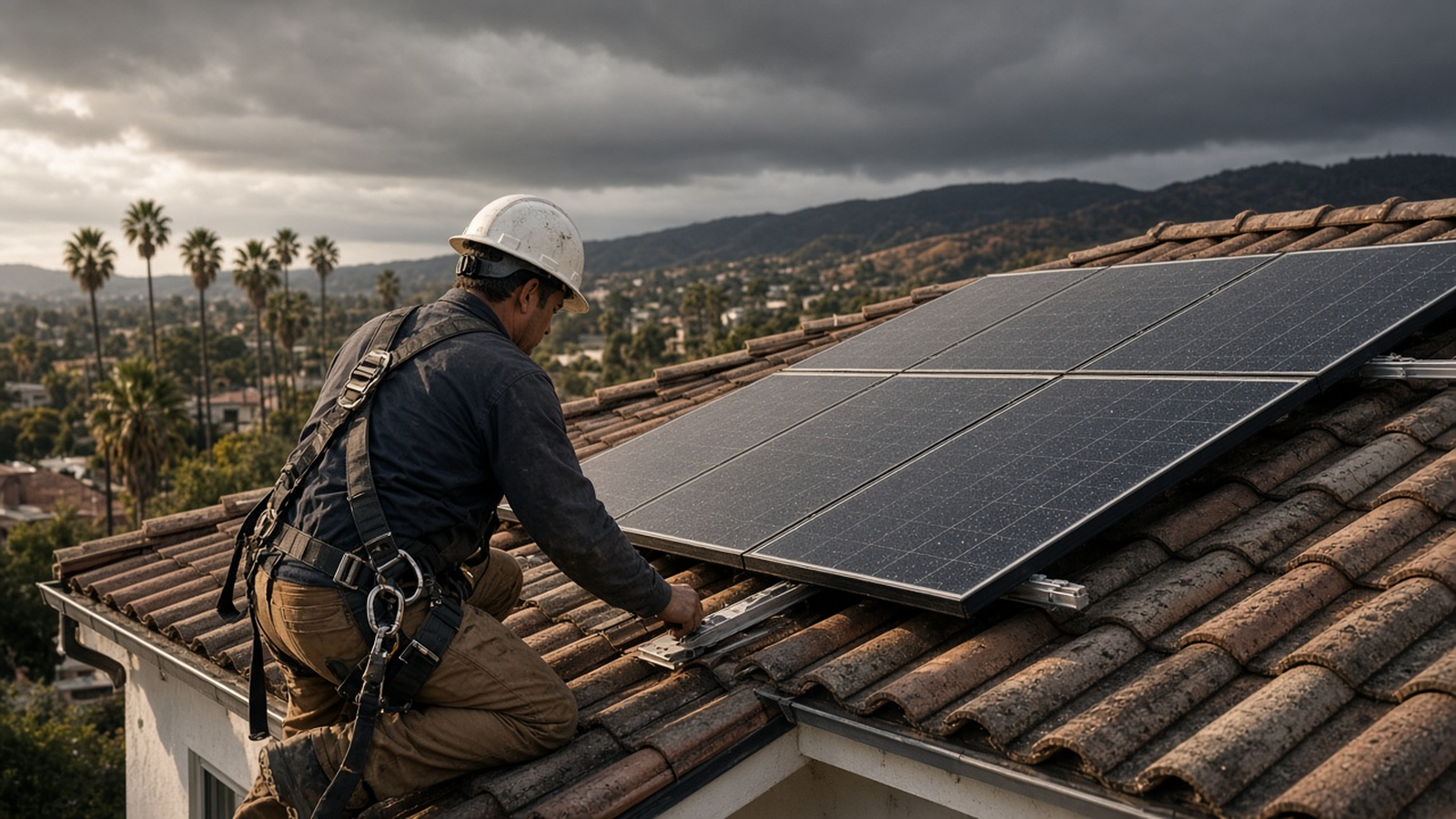

Is your solar system ready for California’s rainy season? A fall solar checkup is one of the easiest ways to protect your investment before the first big storm rolls in. After a long, dry summer, your panels are probably wearing months of dust, pollen, and debris, and the roof they sit on is about to get its first real test in months.
Whether you’re in Bakersfield, the Antelope Valley, Los Angeles, or San Diego, the next few weeks are the right time to take a look. Here’s what to check, what rain will and won’t do for you, and where a professional checkup actually helps.
Why Fall Is the Right Time for a Solar Checkup
Most of Southern California’s rain arrives in a short window. According to the National Weather Service in San Diego, about 85 percent of San Diego’s rainfall happens from November through March. That means your roof, mounts, and seals go from months of baking sun straight into the wettest stretch of the year.
Small problems that don’t matter in July, like a loose wire clip or a cracked bit of sealant, can turn into leaks or damage once storms start. It’s much easier to catch them on a dry fall afternoon than in the middle of a January downpour.
How Much Does Summer Dust Really Cost You?
Dirt on your panels does lower production, but probably less than you think. Researchers at UC San Diego studied 186 solar systems across California and found that panels lost about 0.05 percent of their efficiency per day without rain. Over an average 145-day summer dry spell, that added up to about a 7.4 percent loss (Mejia & Kleissl, Solar Energy, 2013).
That’s real, but it isn’t a disaster. The same study found that nearly flat panels (tilted less than 5 degrees) got much dirtier, and some sites lost far more than average. Homes near farm fields, freeways, construction, or the coast tend to collect more grime, bird droppings, and salt.
How to Spot Soiling and Production Dips
You don’t need to climb on the roof to know if something is off. Start with your monitoring app:
- Compare to last year: Look at October production this year versus last October on a similarly sunny stretch.
- Check panel-level data: If you have Enphase microinverters, look for one or two panels producing noticeably less than their neighbors.
- Watch for zero days: A day with no production on a sunny day usually means an equipment or communication issue, not dirt.
- Look from the ground: Use binoculars to spot heavy bird droppings, leaves, or debris piled along the bottom edge of the panels.
Keep in mind that shorter fall days naturally lower production. A gradual seasonal dip is normal; a sudden drop or one lagging panel is worth a closer look.
Will the Rain Clean My Panels?
Partly. A good rain of a tenth of an inch or more rinses off much of the loose dust, which is why the UC San Diego researchers found that washing panels usually isn’t worth the cost for most California homes. But rain isn’t a full wash. It often leaves behind bird droppings, sticky pollen, and a muddy line along the bottom edge, and light drizzle can just turn dust into streaks.
If you do clean, keep it simple and safe:
- Use a soft brush or a garden hose from the ground, never a pressure washer.
- Skip harsh soaps and abrasive pads that can damage the glass coating.
- Clean early in the morning or evening, not on hot glass.
- Don’t walk on panels or get on a steep roof yourself. Call a pro.
What to Inspect Before the First Storm
Rain tests the parts of your system you never look at. Before storms hit, it’s worth checking:
- Roof mounts and flashing: The penetrations where your racking attaches to the roof should be sealed and flashed with no gaps or lifted shingles or tiles.
- Sealant and conduit: Look for cracked sealant, loose conduit, or open junction boxes where water could get in.
- Wiring: Wires should be clipped up off the roof, not hanging or chewed by critters.
- Gutters and debris: Clear leaves under and around the array so water can drain instead of pooling.
- Battery and inverter area: Make sure outdoor equipment is clear of standing water and the enclosures are closed.
If you’ve noticed ceiling stains or past leaks near your array, mention them. Those are the first places a technician should look.
What a Checkup Can and Can’t Fix
A fall checkup can catch loose wiring, failed sealant, debris buildup, monitoring problems, and underperforming panels before they cost you more. It can also give you peace of mind heading into winter.
What it can’t do is make an old or damaged roof new again. If your roof is near the end of its life, a checkup may point out that the panels need to come off for a reroof, and that’s a bigger project. It also won’t change your utility rates or make shorter winter days produce like June. Be wary of anyone promising big production gains from a cleaning alone.
The Bottom Line
The rainy season is coming whether your system is ready or not. A quick look at your monitoring data, a safe cleaning if it’s needed, and a professional check of your mounts, flashing, and wiring can keep a small issue from turning into a costly leak. Don’t wait for the first storm to find out.
Ready to make sure your solar is storm-ready?
Vibe Solar serves homeowners from Bakersfield to San Diego. We can check your system’s production, mounts, flashing, and wiring before the rain arrives. Thinking about going solar or adding a battery? We’ll review your utility bill, rate plan, and backup priorities, then design a system around how your household uses power.
Call 661.485.5000 or Click Here to Book Your Free Consultation.
Check out our other blogs HERE.