
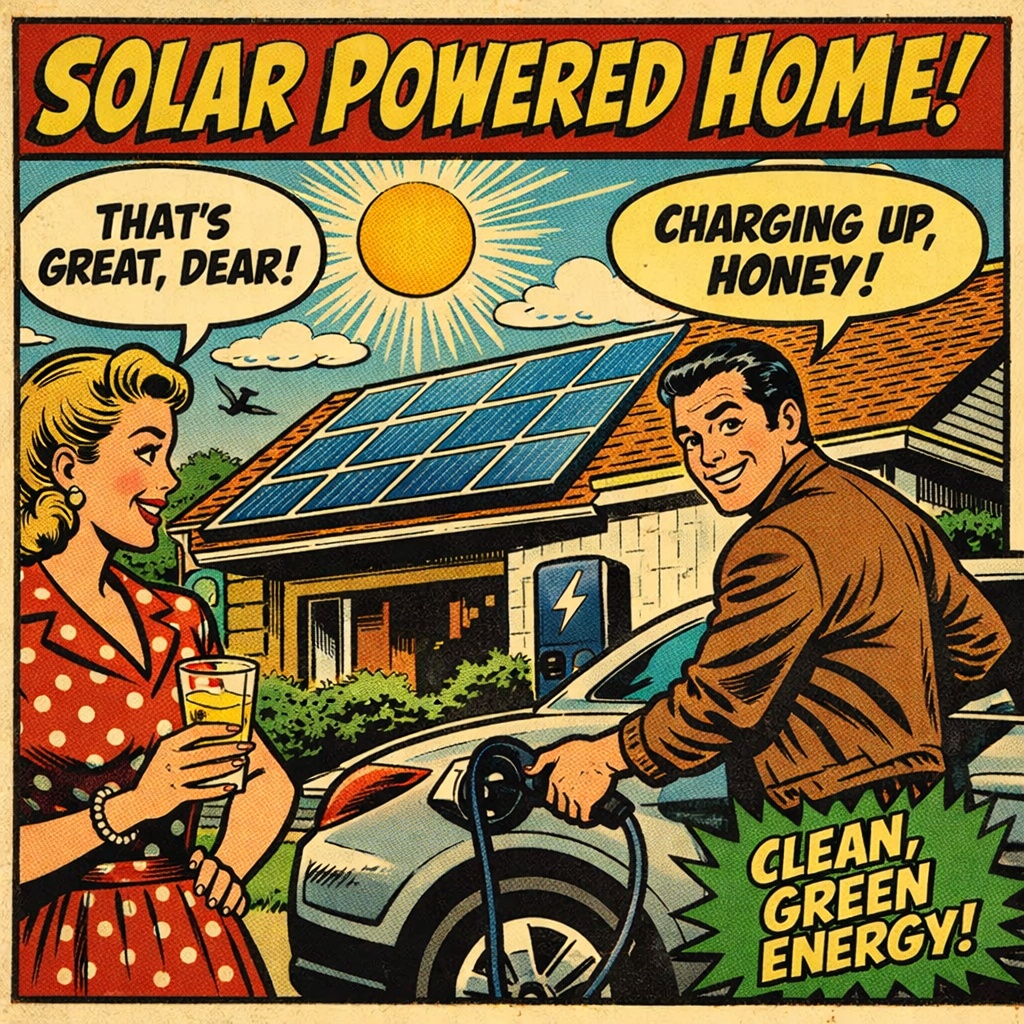
Can I Charge My EV With Solar Panels? Is it a Myth?
A common question homeowners ask when considering renewable energy and electric vehicles is simple: Can I charge my EV with solar and batteries?
The short answer is yes. But the better answer is: Can I charge my EV in a way that maximizes savings, protects me from rising utility rates, and increases energy independence? Absolutely — when your system is designed correctly.
As electric vehicles become more common — from brands like Tesla and Ford to Rivian and Chevrolet — homeowners are realizing that transportation is now part of their home’s energy equation. Gas stations are being replaced by garages. That naturally leads to the question: Can I charge my EV using only the power my home produces?
Let’s break it down clearly.
So Can I Charge My EV?
Yes — you can charge your EV directly from solar panels.
When the sun is shining, your solar system generates electricity. That electricity first powers your home. If your EV is plugged in during solar production hours, it can charge directly from that solar energy.
So if you’re asking, Can I charge my EV during the day using solar? The answer is yes — and that is often the most cost-effective way to do it.
Solar panels can generate electricity that is used to:
• Power your home
• Charge your electric vehicle
• Send excess energy to the grid
• Store surplus power in batteries
Many homeowners intentionally size their solar system larger once they purchase an EV. Why? Because EV charging adds significant daily energy usage.
Can I Charge My EV at Night With Solar?
This is where batteries come in.
A very common question is: Can I charge my EV at night if my solar panels aren’t producing?
Yes — if you have battery storage.
Home batteries like the Tesla Powerwall allow you to store excess daytime solar production. That stored energy can then be used later — including for overnight EV charging.
With batteries, you can:
• Store daytime solar energy
• Charge your EV after sunset
• Reduce reliance on the grid
• Avoid expensive peak utility rates
• Maintain backup power during outages
So if you’re wondering, Can I charge my EV without pulling power from the grid? The answer is yes — as long as your system is properly sized with adequate battery storage.
How Much Energy Does EV Charging Use?
Another important version of this question is: Can I charge my EV without dramatically increasing my electric bill?
EVs typically use between 25–35 kWh per day depending on driving habits. For many households, that can equal or even exceed their home’s daily electricity usage.
For example:
• Driving 40–60 miles per day may require 10–20 kWh
• Over a month, that can add 300–600+ kWh
• Over a year, that is thousands of kilowatt-hours
That’s why homeowners often need:
• Additional solar panels
• Larger inverter capacity
• One or more batteries
The key is designing your solar system to cover both your home usage and your vehicle usage.
Can I Charge My EV on Special Utility Rates?
Many utilities now offer EV-specific or time-of-use (TOU) rate plans. That leads to another smart question: Can I charge my EV during cheaper utility hours?
Yes.
EV rate plans often include:
• Lower overnight charging costs
• Reduced off-peak pricing
• Incentives for EV owners
• Smart charging discounts
When paired with solar and battery storage, these special EV rates can significantly lower your cost per mile driven.
You might ask, Can I charge my EV using stored solar during peak hours and switch to low-cost grid power overnight? Yes — with a smart charger and properly configured system, that level of control is absolutely possible.
Can I Charge My EV During a Power Outage?
This is becoming one of the most important questions homeowners ask: Can I charge my EV if the power goes out?
With the right setup — yes.
If you have:
• Solar panels
• Battery storage
• A backup-enabled inverter
You can continue charging your EV during outages, depending on battery size and load prioritization.
While you may not charge at maximum speed during a blackout, having the ability to add driving range when the grid is down can be a major advantage.
Best System for EV Charging With Solar
If you’re asking, Can I charge my EV in the most efficient and future-proof way possible? here’s what an optimized system typically includes:
• Solar panels sized for home + EV usage
• One or more solar batteries
• Backup-capable inverter
• Smart Level 2 EV charger
• Enrollment in EV or TOU utility rate plan
This setup allows you to charge using:
• Real-time solar production
• Stored battery energy
• Low-cost off-peak grid power
It also protects you from fuel price increases and rising electricity rates.
Final Answer: Can I Charge My EV With Solar and Batteries?
Yes — and in many cases, it is one of the smartest energy decisions a homeowner can make.
If you’re asking:
• Can I charge my EV with solar panels? Yes.
• Can I charge my EV at night? Yes — with batteries.
• Can I charge my EV cheaply? Yes — with EV rate plans and smart charging.
• Can I charge my EV during an outage? Yes — with backup-enabled storage.
When designed correctly, solar + batteries + EV charging work together to lower fuel costs, reduce reliance on the utility company, and increase energy independence.
If you want to know exactly how many panels or batteries you need, a quick system evaluation can determine:
• Required solar size
• Battery capacity
• Best rate plan
• Estimated cost per mile
So the next time you ask, Can I charge my EV with solar and batteries? — the answer is confidently yes.
U.S. Department of Energy – Alternative Fuels Data Center (AFDC)