For years, one of the biggest hurdles to buying an electric vehicle has been the upfront cost. While fuel savings and lower maintenance costs make EVs attractive over time, many homeowners struggled with the initial purchase price—especially after the federal EV tax credit was eliminated.
California has responded.
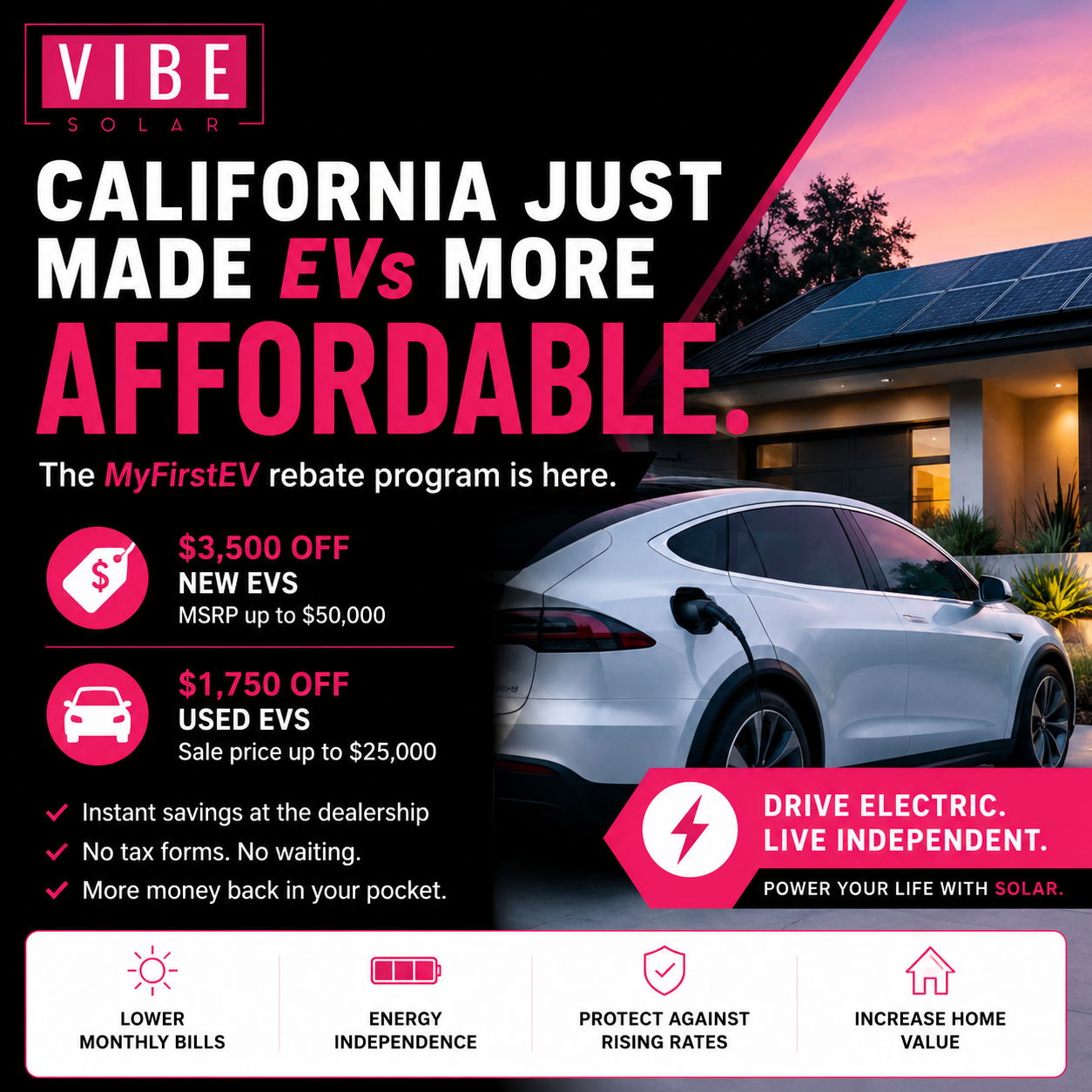
Governor Gavin Newsom recently signed SB 168, creating the new MyFirstEV rebate program. The goal is simple: make purchasing an electric vehicle easier by providing an instant discount at the dealership instead of making buyers wait for tax credits months later.
While this is certainly exciting news for anyone considering an EV, it also creates a bigger conversation—how will you power that vehicle once it’s sitting in your driveway?
A Simpler Way to Save on an Electric Vehicle
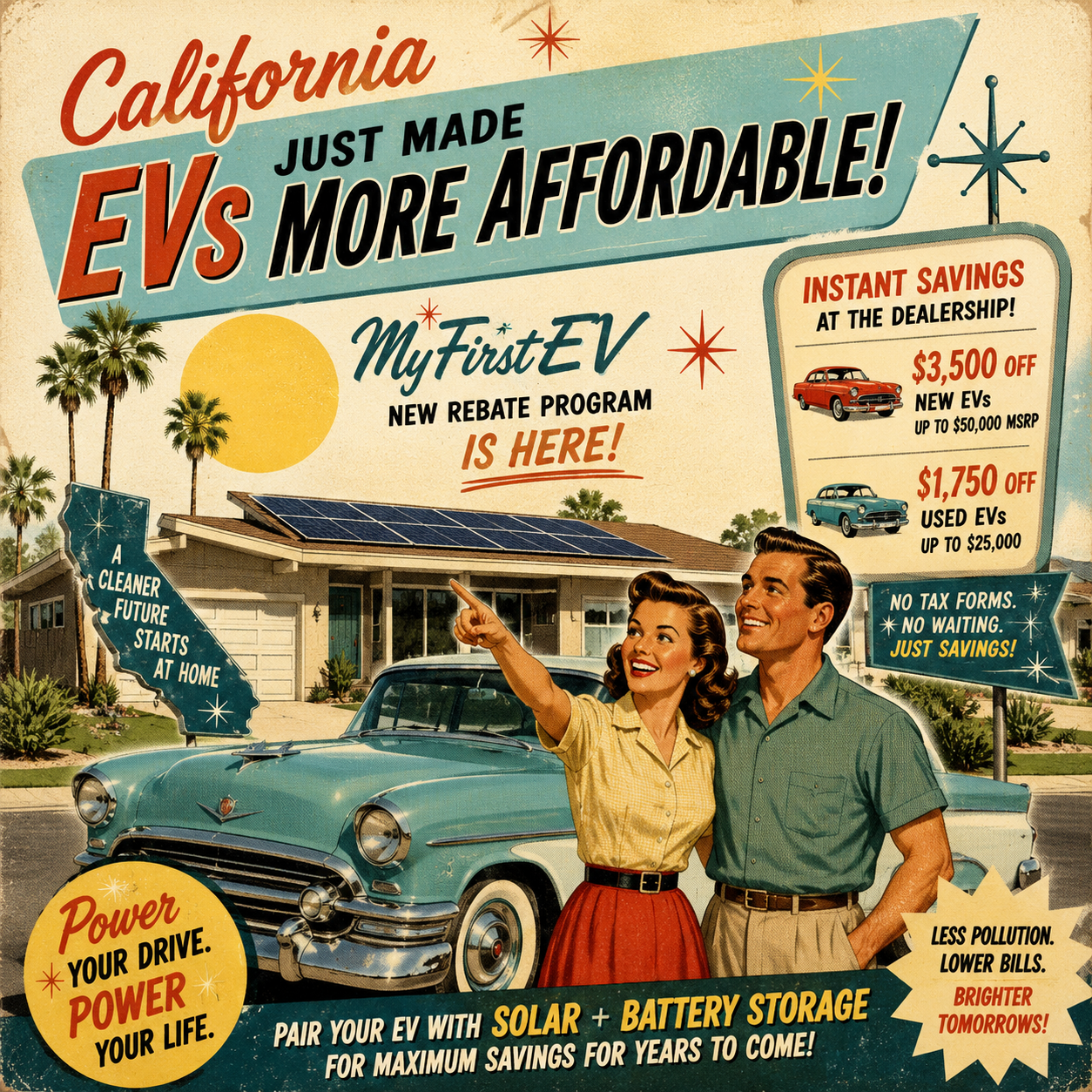
Unlike previous tax credits that required filing paperwork and waiting until tax season, MyFirstEV in California provides an immediate point-of-sale discount.
Current rebate amounts include:
- $3,500 off qualifying new EVs with an MSRP of $50,000 or less
- $1,750 off qualifying used EVs priced at $25,000 or less
The rebate is applied directly at participating dealerships, reducing the purchase price immediately.
This removes one of the biggest frustrations buyers had with previous incentive programs—waiting months to receive financial benefits.
Not Every EV Qualifies
The legislation includes some unique rules.
California-based automakers that exclusively manufacture zero-emission vehicles—such as Rivian and Lucid—are exempt from the $50,000 MSRP cap. That means many of their higher-priced vehicles may still qualify for the rebate.
Tesla, however, no longer receives that exemption because the company’s headquarters moved to Texas.
As a result:
- Lower-priced Model 3 and Model Y trims may qualify.
- Premium Model 3, Model Y Performance, Model S, Model X, and Cybertruck models are expected to be excluded under the pricing rules.
CARB is expected to release the official list of participating manufacturers and eligible vehicles before the program launches later this summer.
The Bigger Picture: Your Electric Bill
Buying an EV is only the first step.
The next question becomes:
Where does the electricity come from?
Charging an electric vehicle typically adds 2,500–4,500 kWh of electricity usage each year, depending on driving habits. For many California homeowners, that can increase annual electric costs by hundreds—or even thousands—of dollars under today’s utility rates.
California utilities continue to have some of the highest residential electricity prices in the country, and rates have steadily increased over the past several years.
An EV saves money compared to gasoline—but only if the electricity fueling it remains affordable.
Solar and Batteries Make Even More Sense
This is where solar becomes part of the conversation.
Instead of purchasing more electricity from the utility every month, many homeowners install solar systems sized to handle both their home’s energy needs and future EV charging.
Adding battery storage provides even greater flexibility by allowing homeowners to:
- Charge from solar during the day
- Store excess energy for nighttime charging
- Reduce reliance on expensive peak utility rates
- Maintain backup power during outages (depending on system design)
For homeowners under California’s current NEM 3.0 rules, batteries have become one of the most valuable tools for maximizing solar savings because they allow more of your solar energy to be used inside your home rather than exported to the grid at lower compensation rates.
Planning Ahead Can Save Money
One mistake many homeowners make is installing solar based only on today’s electric bill.
Then six months later…
- They purchase an EV.
- Add another family vehicle.
- Install a pool.
- Upgrade HVAC equipment.
Suddenly their energy usage has increased dramatically.
If you’re considering an electric vehicle—even if you don’t plan to purchase one immediately—it’s worth mentioning that during your solar consultation. A properly designed system can often account for future energy needs, helping avoid the cost and complexity of expanding the system later.
California Continues Investing in Electrification
The MyFirstEV program reflects California’s broader strategy to encourage transportation electrification and reduce emissions.
The program is funded with $270 million, split between the state and participating automakers. Once those funds are exhausted, rebates may no longer be available unless additional funding is approved.
As with many California incentive programs, acting sooner rather than later can be beneficial.
The Bottom Line
The new MyFirstEV rebate makes electric vehicles more affordable than they’ve been since the federal tax credit ended.
But purchasing an EV is only half the equation.
Every mile you drive will eventually appear on your electric bill.
The homeowners who often see the greatest long-term savings are those who think beyond the car itself—planning how they’ll power it for years to come.
If you’re already considering solar, now is an excellent time to discuss future EV ownership with your energy consultant. Building a system around tomorrow’s needs—not just today’s—can help maximize your long-term savings and reduce dependence on rising utility rates.
At Vibe Solar, we believe the smartest energy plans look beyond today’s electric bill. Whether you’re preparing for an electric vehicle, adding battery storage, or simply looking to lower your monthly costs, planning ahead can make all the difference.